


Written By: Jared Mortensen
The G string has a unique place in the history of fashion and undergarments. This minimal piece of clothing has sparked curiosity not just for its design, but also for its unusual name. Many people wonder about its origins and how it came to be called a "G string" in the first place. The answer involves a journey through history, across different cultures, and even into the world of musical instruments.
Understanding why is it called G string requires exploring various theories that have emerged over time. From ancient civilizations to modern fashion, this garment has evolved significantly while maintaining its distinctive name. This article delves into the origins, evolution, and cultural significance of the G string name, providing clarity on a question that many have pondered but few know the answer to.
What's The Origin Of The G String Name?
The term "G string" has several origin theories, each with its own historical and cultural context. While we can't pinpoint exactly which theory is definitively correct, exploring these possibilities offers fascinating insights into how language and fashion terminology evolve.
Musical Instrument Theory
One of the most widely accepted theories links the name to stringed instruments like violins and guitars. The "G string" on these instruments is typically the lowest or thinnest string. The comparison between this string and the minimal fabric of the undergarment seems to have led to the adoption of the term.
This connection may have originated in the late 19th or early 20th century when burlesque performers and dancers wore minimal costumes. The thin strip of fabric resembled the G string on musical instruments, and the name stuck through the years.
Native American Connection
Another theory suggests that the term comes from a garment worn by certain Native American tribes. European settlers observed indigenous people wearing a loincloth-type garment held by a string. In some accounts, this was transcribed as "gee-string" or "gee string" in documents from the 17th and 18th centuries, eventually evolving into "G string."
This theory suggests the term might have been a misinterpretation or corruption of a Native American word that Europeans couldn't properly pronounce or transcribe.
How Has The G String Evolved Over Time?
The evolution of what we now call the G string spans thousands of years and multiple cultures:
Ancient Beginnings
Forms of minimal undergarments resembling G strings have been worn since ancient times:
- Egyptian tomb paintings show dancers wearing minimal clothing similar to modern G strings
- Ancient Rome had the "subligaculum," a thin undergarment worn by athletes
- Various indigenous cultures across the globe developed similar garments independently
Modern Development
The modern G string as we know it began to take shape in the 20th century:
- Early 1900s: Burlesque dancers adopted the style for performances
- 1930s-1940s: Became associated with exotic dancers and performance wear
- 1970s: Began to enter mainstream fashion, particularly in Brazil
- 1980s-1990s: Gained widespread popularity as fashion underwear
- 2000s: Became fully normalized in Western fashion
This evolution shows how a functional garment transformed into a fashion statement over time, all while maintaining its distinctive name.
What Are People Searching About G Strings?
People have many questions about G strings beyond just the origin of the name. Common searches include:
- Are G strings the same as thongs?
- What's the difference between a G string and a thong?
- When were G strings invented?
- Why do people wear G strings?
- Are G strings comfortable?
These searches reveal ongoing curiosity about both the history and practical aspects of this unique garment.
Discover Men G-String Underwear
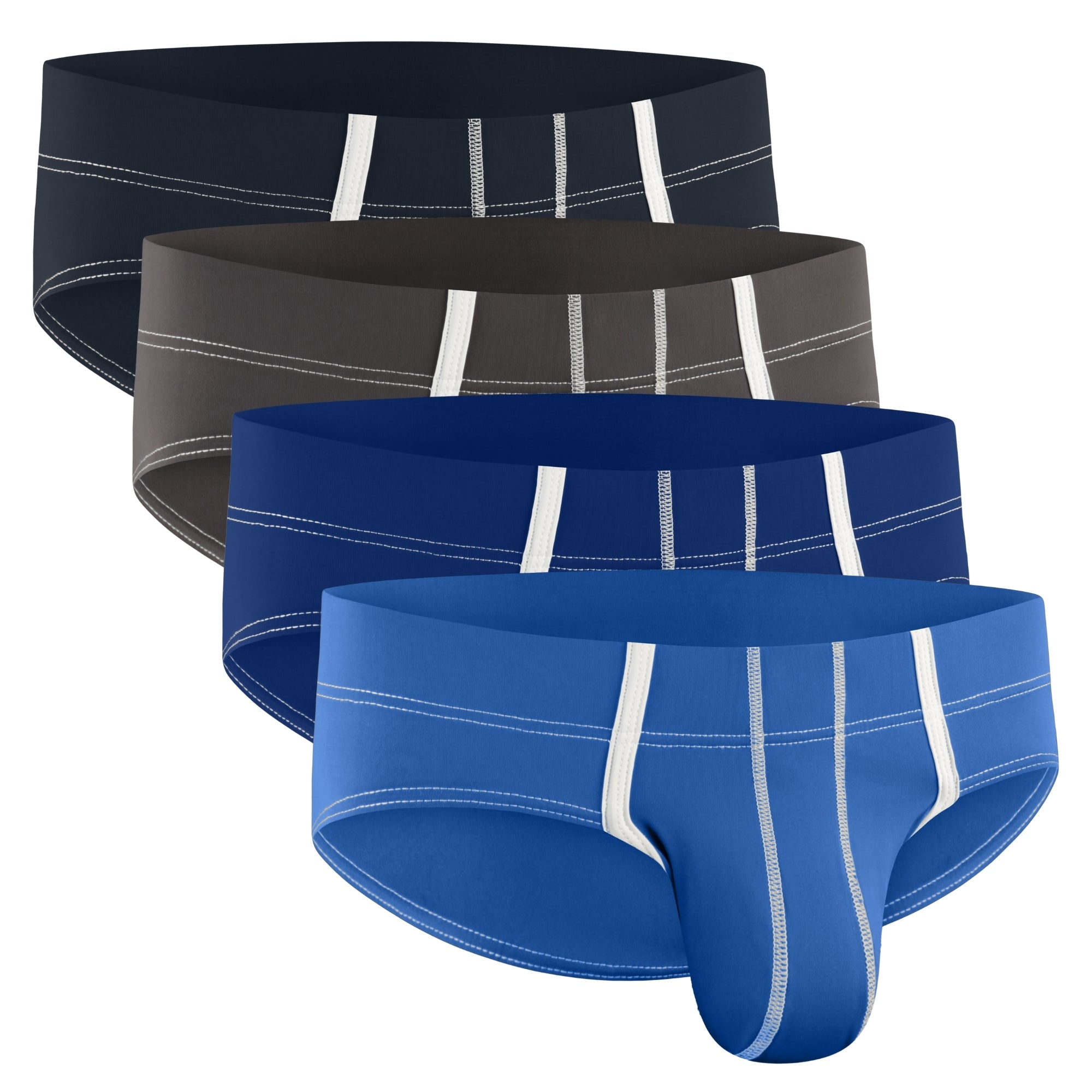
Description (Nylon 0in Sport Briefs No Fly 4pk Blue/Gray/Dark Blue/Dark Gray):
FEATURES
Signature Pouch System
Choose from four precision-fit pouch sizes (A, B, C, D) for a custom, supportive cradle that keeps everything comfortably in place—no matter your size.
Moisture-Wicking Fabric
Advanced breathable fabric pulls sweat away instantly, so you stay cool, dry, and fresh down there from morning to night.
Stay-Put Waistband
A soft, medium-rise band that sits perfectly without rolling, digging, or shifting—so you forget it’s even there.
Dynamic Stretch Support
Ultra-flexible material moves with your body, delivering just the right amount of support and freedom for workouts, workdays, or whatever life throws at you.
FABRIC & CARE
Material: 90% Nylon, 10% Spandex
-
Machine wash cold with like colors
-
Do not bleach
-
Tumble dry low
-
Cool iron if needed
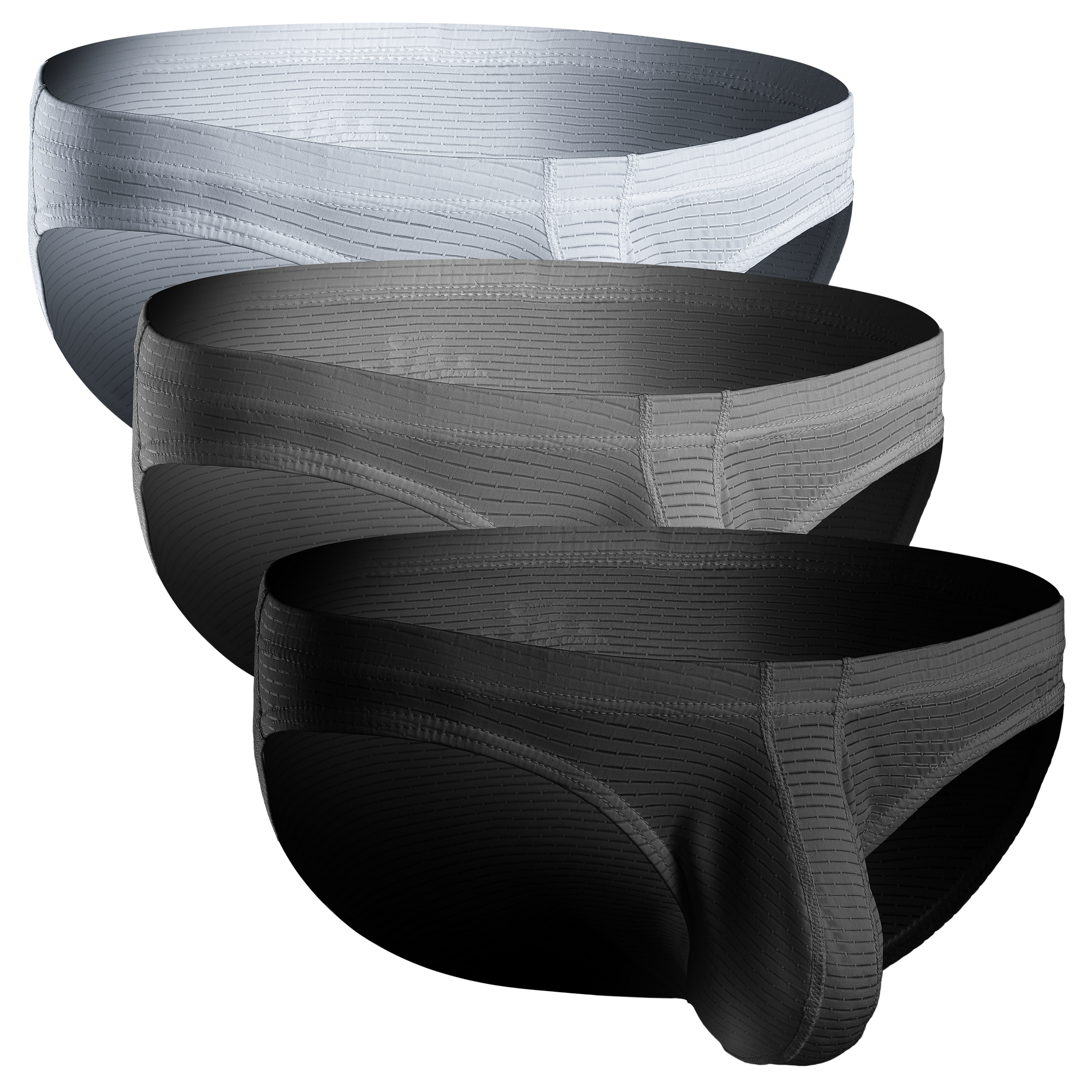
Description (Nylon 0in Low-Rise Bikini Briefs No Fly 3pk Black/Gray/White):
FEATURES
- Personalized Pouch Fit: Four tailored pouch sizes (A, B, C, D) deliver a custom cradle that hugs you perfectly, giving targeted support and all-day comfort exactly where it matters most.
- Breathable Moisture-Wicking Fabric: Ultra-lightweight nylon actively draws sweat away from your skin, so you stay cool, dry, and refreshingly comfortable from sunrise to bedtime.
- Secure Low-Rise Waistband: A soft low-rise band that locks in place without rolling, shifting, or digging in—keeping everything secure and forget-you’re-wearing-it comfortable.
- Tagless Comfort Design: Smooth, irritation-free wear thanks to a completely tag-free construction that feels silky against your skin all day long.
- Ice-Silk Flexible Support: Premium ice-silk nylon and spandex blend gives you effortless stretch and recovery, moving with your body to eliminate chafing or riding up—no matter how active your day gets.
FABRIC & CARE
Material: 87.5% Nylon, 12.5% Spandex
-
Machine wash cold
-
Gentle cycle
-
Do not bleach
-
Lay flat to dry
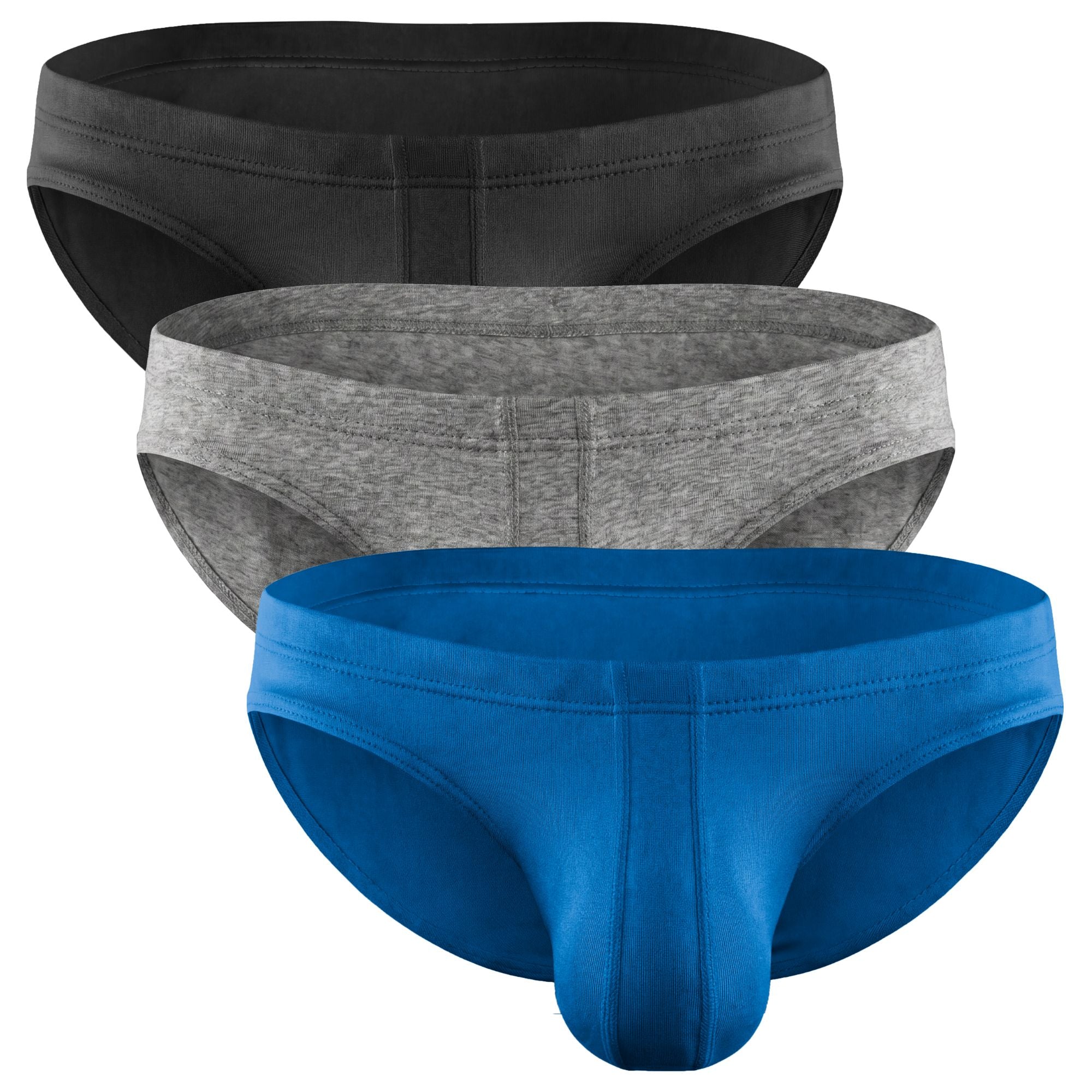
Description (Modal 0in Low-Rise Bikini Briefs No Fly 3pk Black/Blue/Gray):
FEATURES
- REAL Pouch System: Four tailored pouch sizes (A, B, C, D) cradle your crown jewels with a perfectly customized, supportive fit that feels made just for you—no matter your size.
- Breathable Modal Fabric: Ultra-soft, lightweight modal fabric delivers superior breathability and natural moisture management, keeping you cool, dry, and refreshingly comfortable from morning to night.
- Stay-Put Low-Rise Waistband: A soft low-rise waistband that stays exactly where it belongs—without rolling, shifting, or digging in—for all-day security you barely notice.
- Tagless Comfort Design: Smooth, irritation-free wear thanks to a completely tag-free construction that feels silky against your skin from the very first wear.
- Dynamic Modal Stretch: The premium modal and spandex blend gives you effortless flexibility and gentle support, moving seamlessly with your body to prevent chafing or riding up during any activity.
FABRIC & CARE
Material: 95% Modal, 5% Spandex
-
Machine wash cold
-
Gentle cycle
-
Do not bleach
-
Tumble dry low
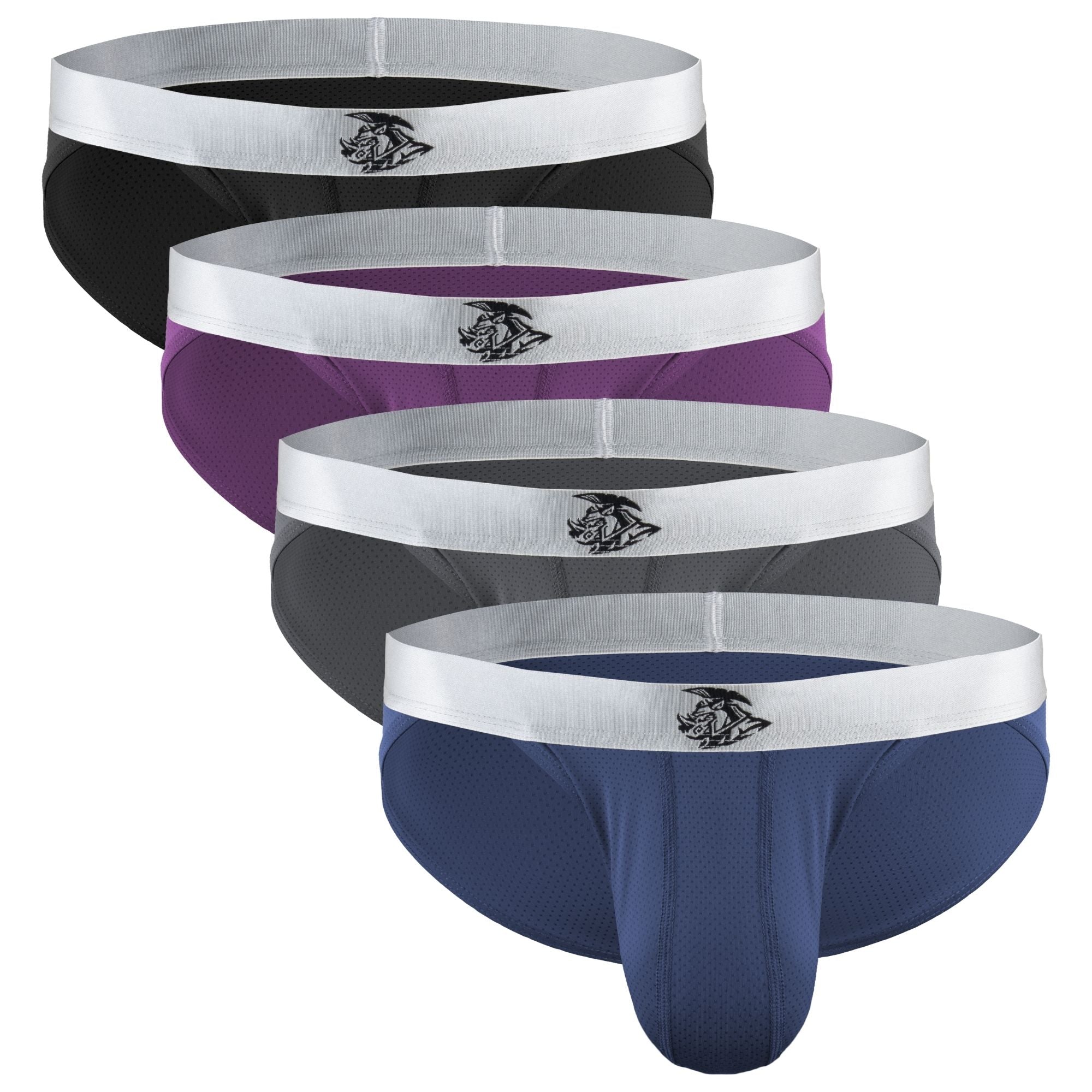
Description (Nylon 0in Mesh Bikini Briefs No Fly 4pk Black/Blue/Gray/Wineberry):
FEATURES
- Tailored Pouch Fit: Four custom pouch sizes (A, B, C, D) create a truly personalized fit that cradles you perfectly, delivering targeted comfort and reliable support exactly where you need it most.
- Breathable Moisture-Wicking Nylon: Ultra-lightweight nylon fabric actively draws sweat away from your skin, so you stay cool, dry, and refreshingly comfortable all day long.
- Secure Low-Rise Waistband: A soft low-rise waistband locks in place without rolling or digging in, giving you a stable, worry-free fit that feels secure from the first step to the last.
- Tagless Irritation-Free Design: Completely tag-free construction means silky-smooth, skin-friendly wear with zero irritation for all-day comfort you barely notice.
- Ice-Silk Flexible Support: Premium ice-silk nylon blended with spandex offers effortless stretch and gentle support, moving seamlessly with your body to prevent chafing or riding up—no matter what your day brings.
FABRIC & CARE
Material: 85% Nylon, 15% Spandex
-
Machine wash cold
-
Gentle cycle
-
Do not bleach
-
Lay flat to dry
Explore the full Men’s G-String Underwear Collection and find your perfect fit.
Discover Also:
G String Vs. Thong: What's The Difference?
One of the most common points of confusion is the distinction between G strings and thongs. While the terms are sometimes used interchangeably, there are specific differences:
- A G string has a very thin strip of fabric or string at the back and sides
- A thong has a wider band of fabric forming a "Y" shape at the back
- G strings typically have less coverage and material overall
- Thongs offer slightly more coverage while still eliminating visible panty lines
This distinction helps explain why the specific "G string" terminology matters and has persisted separately from the broader "thong" category.
Cultural Impact Of The G String
The cultural significance of the G string extends beyond just fashion:
- In performance arts, it revolutionized costume design for dancers
- In fashion, it challenged notions of modesty and practicality
- In beach culture, it influenced the development of minimal swimwear
- In linguistic terms, it demonstrates how technical terms can cross into everyday language
Why is it called G string remains a question linked to these cultural impacts, as the name itself reflects how society viewed and discussed this garment throughout its history.
Regional Variations And Names
Around the world, what Americans call a G string goes by various names:
- In Brazil: "Fio dental" (dental floss)
- In French: "String" or "tanga"
- In Spanish: "Tanga" or "hilo"
- In German: "Stringtanga"
These variations show how different cultures conceptualized the same basic garment, often using metaphors related to thinness and minimalism.
Why Men Wear G-Strings: Practical Benefits Beyond Fashion
Men choose G strings for several compelling reasons that go beyond simple aesthetics. The primary advantage is eliminating visible panty lines under form-fitting clothing like dress pants, athletic wear, or slim-fit jeans. This makes G strings particularly useful for professional settings where a polished appearance matters, as well as for athletes who need unrestricted movement during workouts.
Another significant benefit is the freedom of movement they provide. Unlike traditional underwear that can bunch up or shift during physical activity, G-strings stay in place with minimal fabric. Many men report feeling less restricted during high-intensity workouts or when wearing compression leggings, where bulk can become uncomfortable.
Comfort Considerations for Daily Wear
The comfort level of G strings varies significantly based on fabric choice and construction quality. Modern G strings designed with breathable materials and proper pouch support can actually be quite comfortable for extended wear. The key is selecting styles with soft elastic waistbands that don't dig into the skin and fabrics like modal or cotton blends that prevent chafing.
Temperature regulation is another practical advantage. With minimal fabric coverage, G strings allow for better airflow, making them an excellent choice for hot climates or during summer activities. This is particularly beneficial for men who struggle with overheating in traditional boxer briefs or who need underwear for outdoor adventures.
When To Choose A G String Over Other Underwear Styles
Understanding when to wear a G-string versus thong underwear or traditional styles helps maximize both comfort and functionality. G strings excel in situations requiring absolute invisibility under clothing, such as wearing tailored suits, performance costumes, or athletic gear with moisture-wicking properties.
Special occasions often call for G strings rather than regular underwear. Performers, dancers, and bodybuilders frequently choose G strings because they provide necessary coverage without interfering with movement or appearance. Similarly, men wearing form-fitting formal wear for weddings or business presentations benefit from the seamless look G-strings provide.
Activity-Specific Recommendations
For athletic activities, the choice between G strings and other styles depends on the sport. G strings work well for yoga, dance, and flexibility-focused activities where freedom of movement is paramount. However, for high-impact sports requiring more support, athletic boxer briefs or sport briefs might be better options.
Beach and swimwear contexts present another appropriate use case. G-string swimwear has become increasingly popular among men who want minimal tan lines or prefer the aesthetic of minimal coverage swimwear. The key is choosing swim-specific fabrics that maintain their shape when wet and dry quickly.
What Does the "G" Actually Mean? A Deeper Linguistic Investigation
The single most persistent question embedded within "why is it called G string" is the simplest and least answered: what does the letter G actually stand for? The honest scholarly answer, documented by Etymology Online, Wikipedia, and Charles Fletcher Lummis, the American writer who first transcribed the term in 1878, is that the significance of the G is genuinely unclear and may never be definitively established. What the historical record does confirm is this: the term "geestring" first appeared in American writing in 1878 referring specifically to the string that held up the loincloth worn by certain Native Americans, and the spelling shift to "G-string" appeared around 1882, at which point the violin string theory likely began influencing how the word was spelled if not how it originated. Etymology Online explicitly states the 1878 "geestring" has "etymology unknown," which means every confident explanation of what the G stands for is theory rather than documented fact. Explore RMAC's G string collection and the men's thong underwear range as the modern continuation of this storied garment's lineage.
Three specific theories for the G's meaning have enough documentary support to take seriously. The first is the girdle theory: the compound word "girdle-string" is attested in written records as early as 1846, predating the first "geestring" appearance by 32 years, suggesting that the G may be a shortening of "girdle," a word that historically described any band worn around the waist or body. If "girdle-string" was already in use to describe a waist-held string garment, the contraction to "G-string" via spoken language is linguistically plausible. The second is the groin theory: the G represents a euphemistic abbreviation of "groin", the anatomical region the garment covers, which would make the naming convention a form of polite indirection common in Victorian-era clothing vocabulary where direct anatomical reference was avoided in writing. The third is the musical instrument theory: Charles Fletcher Lummis himself noted that the garment's string "resembled a capital G" in shape when viewed from behind, and separately, the G string on a violin is the lowest, thinnest, and most resonant string, a comparison that burlesque performers and commentators in the early 20th century found apt when describing the minimal back string of the garment. Read the RMAC guide to choosing between G string, jockstrap, and thong options for men for a modern take on the garment that carries this centuries-old naming mystery.
What makes the G string's etymology particularly fascinating as a linguistic case study is the way it demonstrates how words acquire fixed spellings through cultural association rather than etymological accuracy. The "geestring" of 1878, with its spoken-language phonetic spelling, became "G-string" in part because the capital letter spelling aligned neatly with the musical instrument reference that educated writers and commentators found useful as a metaphor. The violin's G string gave the word a culturally respectable association that the phonetic "geestring" did not carry, providing a convenient backstory that was more elegant than "we transcribed a Native American word we couldn't properly pronounce." This pattern, where a word's written form gets retrofitted to align with a more culturally attractive etymology, is well-documented in linguistics and is called "folk etymology" or "etymological reanalysis." The G string may be the most minimally covered garment in fashion, but its name carries layers of linguistic history that take considerably more fabric to unpack. Browse RMAC's full men's G string and thong underwear collection and the world's funniest underwear names and global context for the cultural dimension of how we name intimate garments.
The G String in 2026: Celebrity Culture and the Visible G String Revival
The visible G string, dismissed as a fashion embarrassment for most of the 2010s after its early-2000s "whale tail" peak, completed one of fashion's most complete rehabilitations by 2026, moving from the "worst dressed" lists where paparazzi once gleefully placed it to intentional runway styling and deliberate celebrity fashion statements. The shift began with celebrities deliberately recontextualizing the exposed G string from accident to intention. Hailey Bieber's sheer and backless outfits regularly feature logo thongs positioned with precise deliberateness, most notably her Gucci G-string moment at a GQ red carpet event where a rhinestone-encrusted Gucci double-G monogram medallion anchored her exposed back string, directly referencing Tom Ford's iconic Spring/Summer 1997 Gucci collection that had made the same statement 28 years earlier. Glamour's 2026 lingerie trend report explicitly lists "exposed thongs" as one of six key lingerie trends for the year, confirming the style's graduation from celebrity outlier to mainstream fashion directive. Explore RMAC's men's G string collection and thong underwear for men guide for how this trend translates into men's fashion.
The scale of the G string's 2026 cultural presence is quantifiable in social media terms. The hashtag #WhaleTail has accumulated over 32 million TikTok views, driven by creators who are not treating the visible G string as ironic nostalgia but as a genuinely desirable aesthetic, breaking down fabric choices, positioning, and outfit coordination in the same matter-of-fact way that sneaker content breaks down colorways and sole construction. Paris Fashion Week March 2025 sent models down runways in exposed G strings visible through low-rise trousers and sheer skirts, providing the high-fashion legitimacy that converts a street-style moment into a documented trend with commercial shelf life. Celebrity participation has been broad enough to span multiple style categories rather than concentrating in a single aesthetic: Beyoncé, Dua Lipa, Megan Thee Stallion, Bella Hadid, and Jenna Ortega have all incorporated the visible G string into public appearances, covering the spectrum from athletic to high-glamour to downtown-cool styling contexts. The breadth of celebrity adoption matters because it signals that the trend is not associated with a single niche audience, it is genuinely cross-demographic. Read RMAC's insights on men's underwear trends for 2026 and browse the men's G string and thong range to explore how these trends translate into men's fashion choices.
The men's dimension of the G string revival is developing on a slightly delayed cultural timeline relative to women's fashion, but the trajectory is clear and the market data supports sustained growth. Men's G strings and thongs are gaining mainstream attention driven by evolving fashion sensibilities, shifting attitudes toward male body positivity, and the same social media normalization pipeline that has rehabilitated the visible G string in women's fashion. The men's intimate apparel market data shows V-string and T-back styles seeing increased interest specifically, designs that sit at the intersection of G string minimalism and slightly more structured support, suggesting that the men's market is adopting the G string aesthetic while seeking versions that address the practical support question that pure string construction does not. Bold colors, eye-catching prints, and innovative fabrics including modal, microfiber, and bamboo are shaping men's G string design in 2026, moving the category from the plain black utility item toward the fashion-conscious expression that the women's category has long demonstrated. The men's underwear market overall is growing at 4.2% CAGR from 2026 to 2033, with G strings and thongs identified as among the fastest-growing subcategories within that growth story. Browse RMAC's complete men's thong and G string collection and the men's sexy underwear range to explore how 2026's G string moment translates into premium men's intimate wear.
How to Choose the Best Men's G-String Underwear: Sizing, Fabric, and Pouch Fit Guide?
Pouch fit comes first when men pick men's G-string underwear. The right pouch shape holds everything in place without squeezing or shifting during the day. Brands like RMAC sort pouches by size with letters from A to D so each guy finds his match based on his build.
Waist size follows right after. Measure around the spot where the band will sit. Pick the number that feels snug yet comfortable. A band that digs in ruins the whole experience no matter how thin the back string feels.
Fabric choice matters just as much for all-day performance. Modal stays soft against skin and moves moisture away during normal activities. Nylon blends with spandex give extra stretch for workouts while they keep their shape wash after wash. Mesh options let air flow in hot weather.
The Underwear Quiz on the RMAC site matches these details to the perfect style in seconds. Many men rely on men's thong underwear when they want a bit more back coverage paired with the same pouch technology. Others stick with pure G-string styles for the absolute minimal feel under tight pants.
Are Men's G-Strings Comfortable for Daily Wear? Real Benefits and Adjustment Tips
Some guys worry the thin string will bother them all day. High-quality versions made with smooth edges actually settle in and feel like they disappear after the first hour. Breathable fabric helps a lot in warm offices or during commutes. Freedom of movement stands out as the top reason men keep wearing them. No bunching happens under dress pants or gym shorts. The minimal design lets legs move freely whether someone sits at a desk or runs errands.
A short break-in period helps most first-time wearers. Start with a few hours at home then build up to full days. Choose the correct pouch depth so nothing feels pinched or loose. The waistband should sit flat without rolling. Men's G-string comfort improves when the fabric wicks sweat and the seams stay flat. Many switch to this style for summer because less material means cooler skin. The same design works under athletic shorts without extra layers getting in the way.
Latest News In 2026
New modal blends hit the market early this year with even softer feel and faster drying times. Designers added subtle color pops that work under light-colored work pants without showing through. Pouch engineering took another step forward too. Updated shapes now offer gentle lift while they still keep the classic G-string back string. The changes came from direct feedback on everyday wear patterns. Runway shows featured more minimal cuts in activewear lines. Celebrities paired them with tailored suits and low-rise jeans in casual settings. The style moved from occasional use to regular rotation for many guys. Fresh drops include mesh panels on the sides for extra ventilation during warmer months. These small updates keep the original minimal design while they address common feedback on breathability.
FAQ
What does the letter "G" in G string actually stand for, is there a definitive answer?
There is no single definitively established answer, and the honest scholarly position, documented by Etymology Online and Wikipedia, is that the significance of the G is genuinely unclear. The word "geestring" first appeared in American writing in 1878 referring to the string holding up a Native American loincloth, with "etymology unknown." Three theories have documentary support. The girdle theory is the most linguistically grounded: the compound word "girdle-string" appears in written records as early as 1846, predating the "geestring" by 32 years, suggesting G may be a contraction of "girdle", a historical term for any waist-encircling band. The groin theory proposes the G is a Victorian-era euphemistic abbreviation of "groin," following the common 19th-century practice of avoiding direct anatomical language in writing. The musical instrument theory holds that the thin G string of a violin, the lowest and thinnest string, provided a useful metaphor when burlesque performers adopted the garment in the early 20th century, influencing the spelling shift from "geestring" to "G-string" around 1882. The most probable explanation is that all three contributed at different historical moments: the word likely originated from a phonetic transcription of a Native American term, then had its spelling retrofitted toward "G" because of the appealing musical metaphor, a well-documented linguistic phenomenon called folk etymology. The mystery is part of the word's cultural richness. Explore RMAC's G string collection carrying on this linguistically fascinating legacy
How is a men's G string different from a women's G string in terms of design?
The fundamental architecture is identical, waistband, thin back string, and front pouch, but the front section differs substantially between men's and women's designs to accommodate different anatomy. Women's G strings typically feature a flat, triangle-shaped or minimal rectangular front panel that provides coverage without any three-dimensional structure. Men's G strings require a front pouch with three-dimensional anatomical shaping, depth, width, and lift geometry, that holds male anatomy forward and away from the body rather than lying flat against it. The quality of this pouch engineering is the single most important design variable in men's G string comfort: a flat or poorly shaped pouch provides no genuine support, causes uncomfortable compression, and forces repeated adjustment during wear, while a properly shaped anatomical pouch with the right depth for the wearer's anatomy feels natural and stays in position throughout the day. RMAC's A–D pouch sizing system applies this principle to G string design just as it does to jockstraps and boxer briefs, recognizing that male anatomy varies significantly and that one universal pouch size serves average anatomy while compromising comfort for everyone else. The waistband construction also differs between men's and women's designs: men's G strings typically feature wider, more structured waistbands that maintain position across a larger hip-to-waist ratio, while women's designs often use narrower string or thin elastic waistbands. Browse RMAC's men's G string and thong collection with anatomically designed pouches for a men's-specific fit.
What fabrics work best for men's G strings in 2026, and which should I avoid?
The best fabrics for men's G strings in 2026 balance three competing requirements: softness against sensitive skin, moisture management during activity, and structural integrity of the waistband elastic and pouch shaping over repeated washing. Modal is the premium everyday choice, its fiber structure is inherently softer than cotton, it breathes well, manages moisture effectively for low-to-moderate activity, and holds its shape and softness through many wash cycles without degrading. Microfiber nylon-spandex blends are the best performance choice for active wear, they provide excellent moisture-wicking, dry faster than modal, and the higher spandex content delivers the stretch-and-recovery behavior that keeps the pouch in correct position during movement. Bamboo blends offer a middle ground with natural antimicrobial properties that extend hygiene between washes, a practical advantage for everyday G string wear. Mesh fabrics provide maximum airflow for hot-weather wear or tropical climates but sacrifice some pouch structural support due to their open construction, best for casual or aesthetic purposes rather than active use. What to avoid: thick cotton that retains moisture and loses elasticity quickly, rigid synthetic fabrics with low spandex content that don't move with the body, and any construction with raised internal seams in the waistband or pouch that contact skin repeatedly through the day. The absence of rear fabric in a G string means back seams are irrelevant, but front pouch seam construction is critical, flatlock or bonded seam construction eliminates the chafe risk that conventional stitching creates in the pouch contact zone. Find RMAC's best fabric options in their men's underwear collection alongside the G string range.
How should I wash and care for men's G-strings to extend their lifespan?
Men's G strings require more careful washing than standard boxer briefs primarily because of two structural vulnerabilities: the waistband elastic and the thin back string. Both are subject to rapid degradation from heat, harsh detergents, and mechanical agitation, and because G strings use significantly less fabric than other underwear styles, any elastic failure immediately renders the garment unwearable rather than simply less supportive. The washing protocol that extends G string lifespan most effectively is: machine wash cold on a gentle cycle (or hand wash), mild detergent without bleach or enzyme additives, and air dry flat or hang dry rather than tumble drying. Heat is the primary enemy of G string elastic, both the tumble dryer's heat and hot water washing accelerate elastic fiber breakdown, causing the waistband to lose tension and the back string to lose its snap. Fabric softeners should be avoided for the same reason they damage athletic underwear: they coat the fibers with a residue that degrades moisture-wicking finish and weakens elastic structure over time. For the thin back string specifically, avoid wringing or twisting the garment after washing, lay it flat or hang it with the waistband supporting the weight rather than hanging from the string itself, which can stretch it permanently. Storing G strings flat rather than balled up preserves the pouch's three-dimensional shaping. As a lifespan indicator: if the waistband has lost noticeable tension or the back string has stretched out of its original gauge, the garment is no longer providing its intended fit and should be replaced, typically after 6–12 months of regular wear depending on washing frequency and fabric quality. Browse RMAC's durable, premium men's G string collection built to maintain their construction through proper care.
Is it comfortable for men to wear G-strings daily?
Comfort levels vary based on personal preference and garment quality. High-quality G strings made from soft, breathable fabrics like modal or cotton blends can be comfortable for daily wear once you adjust to the minimal coverage. The key factors are proper sizing, smooth waistbands that don't cut into skin, and fabrics that prevent chafing. Many men find that after an initial adjustment period, G strings feel liberating rather than restrictive. However, daily wear isn't for everyone; some men prefer rotating between G strings and boxer briefs depending on their activities and clothing choices.
What's the actual difference between a G string and a thong for men?
The main distinction lies in coverage and construction. G strings have a thin string or a narrow strip of fabric at the back, providing minimal coverage with the least amount of material possible. Thongs feature a wider band of fabric forming a "Y" or "T" shape at the back, offering slightly more coverage and often a more substantial waistband. G strings typically have a string waistband, while thongs usually have an elastic band that's one to two inches wide. Both eliminate visible panty lines, but G-strings are virtually undetectable under even the tightest clothing, whereas thongs provide a bit more security and support.
When did men start wearing G-strings as regular underwear?
While G strings have ancient origins as loincloths worn by various cultures, their modern adoption as men's underwear evolved gradually throughout the 20th century. The term "G string" first appeared in American writings in 1878, referring to Native American loincloths, but it didn't apply to modern underwear until the 1930s. Initially associated with exotic dancers and performers in the 1930s-1950s, G strings entered mainstream men's fashion during the 1980s-1990s alongside the broader acceptance of minimal underwear styles. By the 2000s, they became normalized as a legitimate underwear option for men seeking comfort, practicality, or a specific aesthetic.
Are G strings appropriate for athletic activities?
G strings can be suitable for certain athletic activities but aren't ideal for all sports. They work best for activities requiring maximum flexibility and range of motion, such as yoga, dance, gymnastics, or bodybuilding where freedom of movement matters more than support. The minimal fabric prevents bunching and allows unrestricted leg movement. However, for high-impact sports like running, basketball, or contact sports, most athletes prefer underwear with more support like compression shorts or athletic briefs. The deciding factor is whether your activity prioritizes support and protection or mobility and minimal coverage.
How do I choose the right size G string?
Proper sizing is critical for G string comfort. Measure your waist at the point where the waistband will sit, typically at or just below your natural waistline. Most brands size G strings similarly to regular underwear (Small, Medium, Large), but check specific size charts as fit can vary significantly between manufacturers. The waistband should fit snugly without digging in or creating bulges, while the front pouch should comfortably accommodate without feeling tight. When trying G strings for the first time, consider ordering multiple sizes to find your perfect fit. Remember that different fabrics have varying amounts of stretch, nylon blends typically offer more give than cotton.
Can wearing G strings cause health issues?
When worn properly and made from appropriate materials, G strings don't inherently cause health problems for most men. The key considerations are fabric choice and hygiene practices. Breathable, natural fabrics like cotton or moisture-wicking synthetics help prevent bacterial growth and irritation. Tight synthetic fabrics that trap moisture can potentially lead to chafing or skin irritation, similar to any poorly fitted underwear. Change out of sweaty G strings promptly after exercise, just as you would with any athletic underwear. If you experience persistent discomfort, redness, or irritation, try different fabrics, adjust sizing, or consult with a healthcare provider about whether G strings are right for your body.
How does pouch size affect daily comfort in men's G-strings?
Pouch size plays a major role in preventing skin irritation and keeping support consistent from morning until night. A well-matched pouch distributes weight evenly so the body experiences less strain during long periods of sitting or standing. Men with different body shapes notice big differences when they switch to a pouch designed for their specific needs. The right choice also reduces the need for constant adjustments throughout active parts of the day.
Which fabric lasts longest in regular G-string use?
Certain synthetic mixes hold their shape better over many wash cycles compared to basic materials. They resist stretching in the waistband and back string areas where tension runs highest. Fabrics that manage heat and moisture also tend to stay fresh longer during repeated daily use. This durability helps the garment maintain its original fit and feel even after regular wear in various conditions.
Can men wear G-strings under athletic clothes without issues?
The minimal back design stays completely hidden under compression fabrics and performance shorts. It allows full range of motion in activities that involve lots of bending and stretching. The construction avoids extra bulk that could create distractions during focused training sessions. This makes the style a practical option for sports that prioritize flexibility over heavy support.
What makes a men's G-string different from a standard thong?
Construction details set the two styles apart in coverage and feel. G-strings use the narrowest possible strip in the rear while thongs offer a slightly wider band that creates a different silhouette. The waistband style and overall material distribution also vary between the two options to suit different preferences. These differences influence how each type performs under specific clothing types and during different daily routines.
Summary: The Enduring Mystery Of The G String Name
The question of why is it called G string reveals a fascinating intersection of fashion history, linguistic evolution, and cultural exchange. While the most probable explanation links the name to the thin G string on musical instruments, the multiple origin theories reflect how fashion terminology often develops through complex, sometimes untraceable paths.
What remains clear is that this minimal garment has maintained its distinctive name through centuries of evolution, from functional clothing to fashion statement. The persistent curiosity about its name demonstrates how everyday objects can hold surprising historical and cultural significance.
Real Men Apparel Company understands the importance of comfortable, well-designed undergarments for men. While they don't specifically focus on G strings, their premium underwear collection offers options that prioritize comfort and support without sacrificing style. With attention to quality materials and thoughtful design, Real Men Apparel provides underwear that meets modern expectations for both function and fashion, regardless of the style or terminology involved. Their commitment to customer satisfaction makes them a trusted choice for men seeking quality undergarments that feel great all day long.


